Commercial roofing for your Balch Springs building
A roof problem should be understood in the context of the whole building. Start with the existing system, the source of trouble and the work needed to protect the space below.
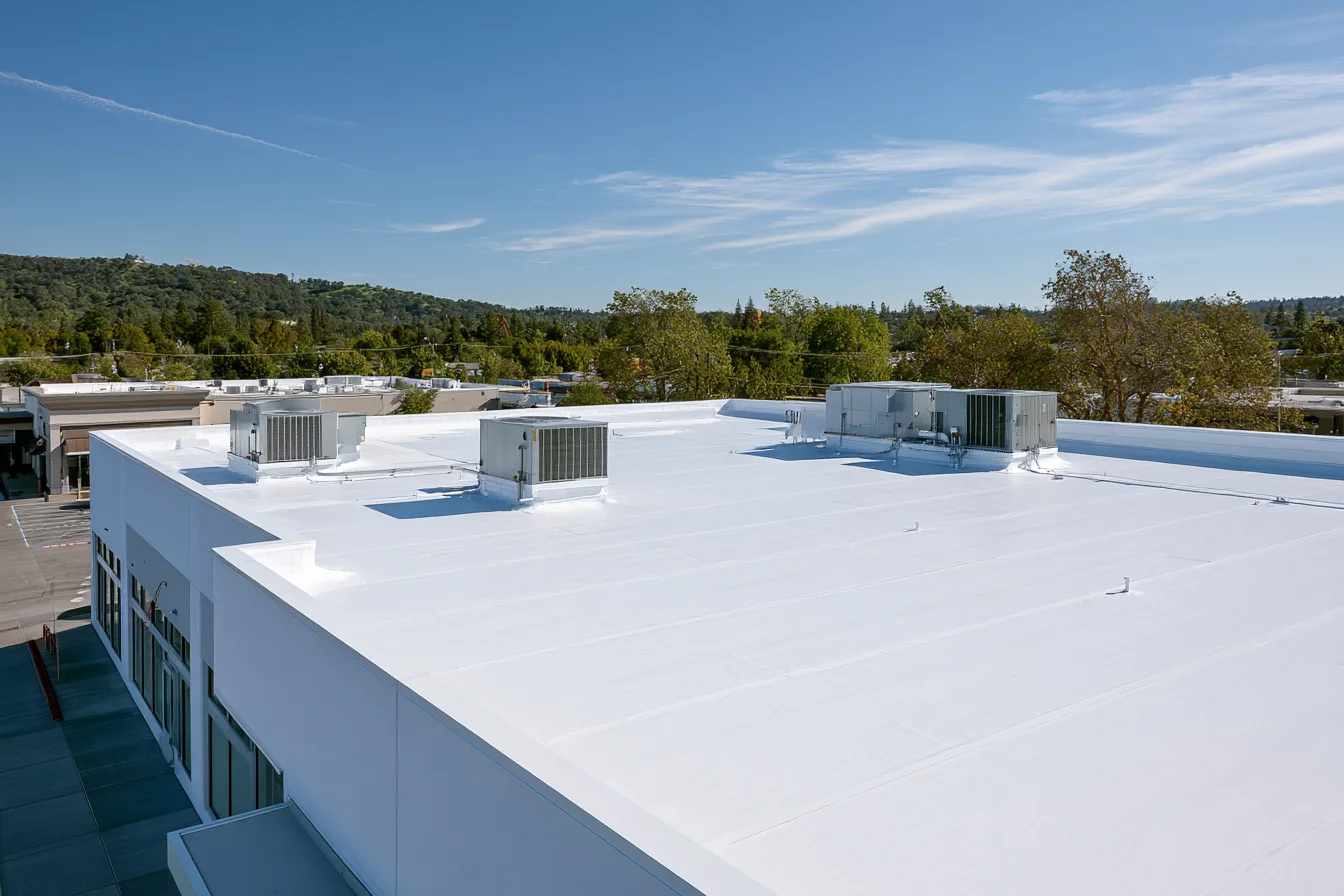
Plan your Balch Springs commercial roof around its condition
A leak over a stockroom and aging seams across a low-slope roof are different projects. One may call for a focused repair. The other may need a wider assessment of the membrane and the layers beneath it. Choosing the work too early can leave the reason for the failure unresolved.
For your Balch Springs commercial property, begin with the roof’s condition and how the building is used. Drainage paths, rooftop equipment, previous repairs and any wet insulation help define a workable scope. Access and occupied areas then shape how that work can be carried out.
Request a free roof inspection to begin that conversation. If you have roof plans, warranty documents, a leak log or records of recent equipment work, keep them available. They can help connect today’s concern with the existing assembly.
Commercial roof repair and replacement in Balch Springs
These are different approaches, not successive price levels. The roof needs to qualify for the work being proposed.
- Repair the failure
A localized seam, flashing or penetration problem may be repaired when surrounding material and underlying layers remain suitable. Establish the leak source and the area affected before settling on a patch.
- Restore a suitable roof
A compatible coating system may be an option over a roof that can be properly prepared. Moisture, loose material, drainage and adhesion need to be addressed. Coating over a problem does not remove it.
- Replace what has failed
Widespread deterioration, wet layers or an unsuitable existing assembly can move the discussion toward replacement. The proposal should distinguish the new system from removal, insulation, decking and drainage work.
Roof systems for Balch Springs commercial properties
Product names alone do not tell you whether a system fits your building. Compare the existing substrate, seams, movement and moisture conditions with the proposed work.
TPO membrane
TPO is a single-ply membrane used on low-slope roofs, with heat-welded seams. The TPO roofing page explains attachment, insulation and the details around edges and equipment.
Establish the existing assembly, fastening or attachment approach, insulation condition and the details around equipment. A new membrane does not by itself correct a drainage problem.
Roof coatings
A compatible existing assembly must be suitable for cleaning, repair and preparation. Roof coating qualification explains why moisture and adhesion conditions come before restoration.
Determine whether moisture or damaged material must be removed, whether the surface can accept the coating, and how seams, penetrations and ponding areas will be treated.
Existing flat-roof repair
Repair work must fit the installed material and the failed detail. Flat roof repair follows the leak path and establishes the limits of sound material around it.
Identify the roof system, the leak source and the limits of sound material. Ask whether moisture assessment or opening part of the assembly is needed to define the work.
For system details, see the manufacturer’s TPO overview. Product information is a starting point; the contractor’s assessment and proposed assembly govern the project.
How a Balch Springs commercial roof project comes together
Whether the answer ends up being a repair, a coating or a new roof, the work that leads to it follows the same order. Each step narrows the decision.
Map the leaks from inside
Stained tiles, the rooms affected and when each leak shows up give the roof walk its starting points. A leak log from your staff or tenants, even a rough one, saves time.
Walk the roof with those points in mind
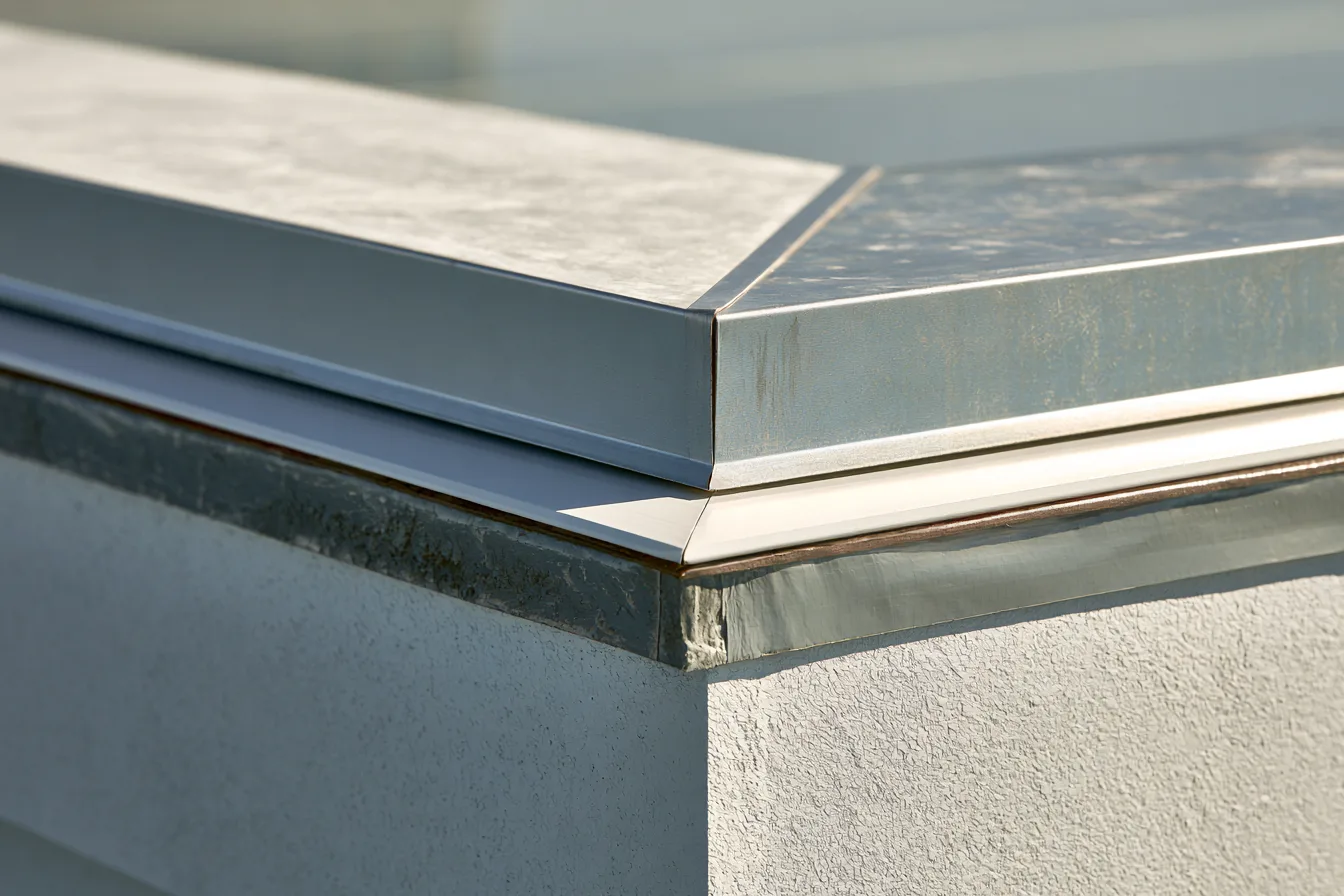
Seams, flashings at walls and curbs, pipe penetrations, pitch pans, drains and scuppers are checked near each leak, then across the whole roof. Standing water, soft spots underfoot and earlier patches are noted by location.
Find out what is wet
On a low-slope roof the membrane can look fine over insulation that is soaked. A small core cut through the roof, patched afterward, shows every layer down to the deck. Larger roofs can justify an infrared or other moisture survey. How much wet insulation there is decides more than anything else whether repair or coating is still on the table.
Choose the path and define it
A proposal worth comparing says which areas are repaired, which wet sections are cut out and replaced, what happens at every curb and drain, and how the work is priced if more wet insulation turns up than expected.
Stage the job around the building
Material loading, roof access, dumpster placement, noise over occupied space, odors near air intakes and work hours are settled before anyone starts. Any rooftop unit that has to be lifted or disconnected involves your mechanical contractor.
Work in sections that close each day
Commercial roofing moves across the building in sections, and each one is made watertight before the crew leaves. The building underneath stays in business throughout.
Look beyond the place where water comes in
Water can travel before it appears inside a building. A stain near equipment may involve a curb or flashing, an adjacent seam, or water moving from somewhere else. The investigation should follow the water path rather than assume the interior mark sits below the source.
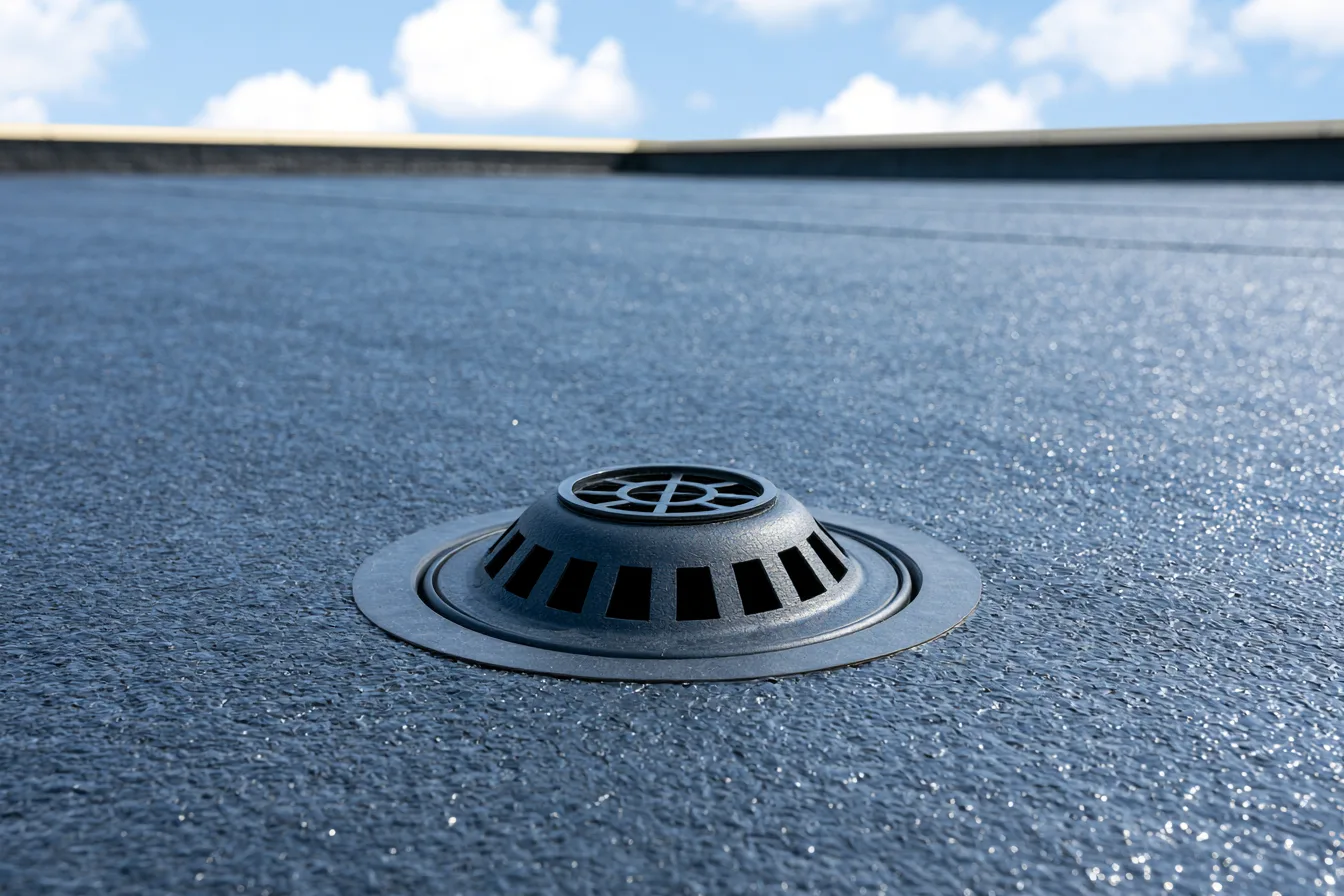
Drains and scuppers are part of that picture. Debris, deterioration around a drain or a low area can hold water where the roof must remain watertight. Ask what maintenance is needed and whether the drainage arrangement itself needs further evaluation.
For ongoing care, keep a record of leak locations and changes after rooftop service visits or severe weather. Share those observations with the roofer. Have access and safe maintenance practices set by people qualified to work on that roof.
Commercial roofing FAQs in Balch Springs
Can an existing commercial roof be coated instead of replaced?
Sometimes, but suitability needs to be established first. The roof must be compatible with the coating system and capable of being prepared properly. Wet or damaged underlying material, poor adhesion and unresolved drainage can change the scope. Ask what testing and preparation support the recommendation.
Does the whole roof have to be replaced for a recurring leak?
A recurring leak does not automatically mean replacement. It does mean the source and prior repair need a closer look. Sound surrounding material may support a targeted repair; widespread failure or moisture below the surface may require broader work.
Can work be planned around building operations?
Tell the roofer about access, occupied spaces, operating hours and any sensitive areas. The work plan should explain staging, protection and any disruption before you agree to the work. Timing and workable arrangements depend on the project.
What should a commercial roofing proposal explain?
Look for the existing roof condition, removal or preparation, the proposed system, flashings and penetrations, drainage work, affected insulation or decking, exclusions and warranty terms. Items that cannot be known until work begins should be identified, including how changes will be agreed.
Talk through your building’s roof
Share the building’s ZIP code, the roofing concern and any access details that matter. A free inspection is a practical first step toward understanding the work.
(469) 489-5594Start with a free roof inspection.