An isolated detail needs attention
A limited opening, drain-area defect or localized flashing problem can lead to flat roof repair. The repair should still establish the condition around and below that area.
Commercial roof care is easier to plan when drainage, detail condition and repair history remain visible from one visit to the next.
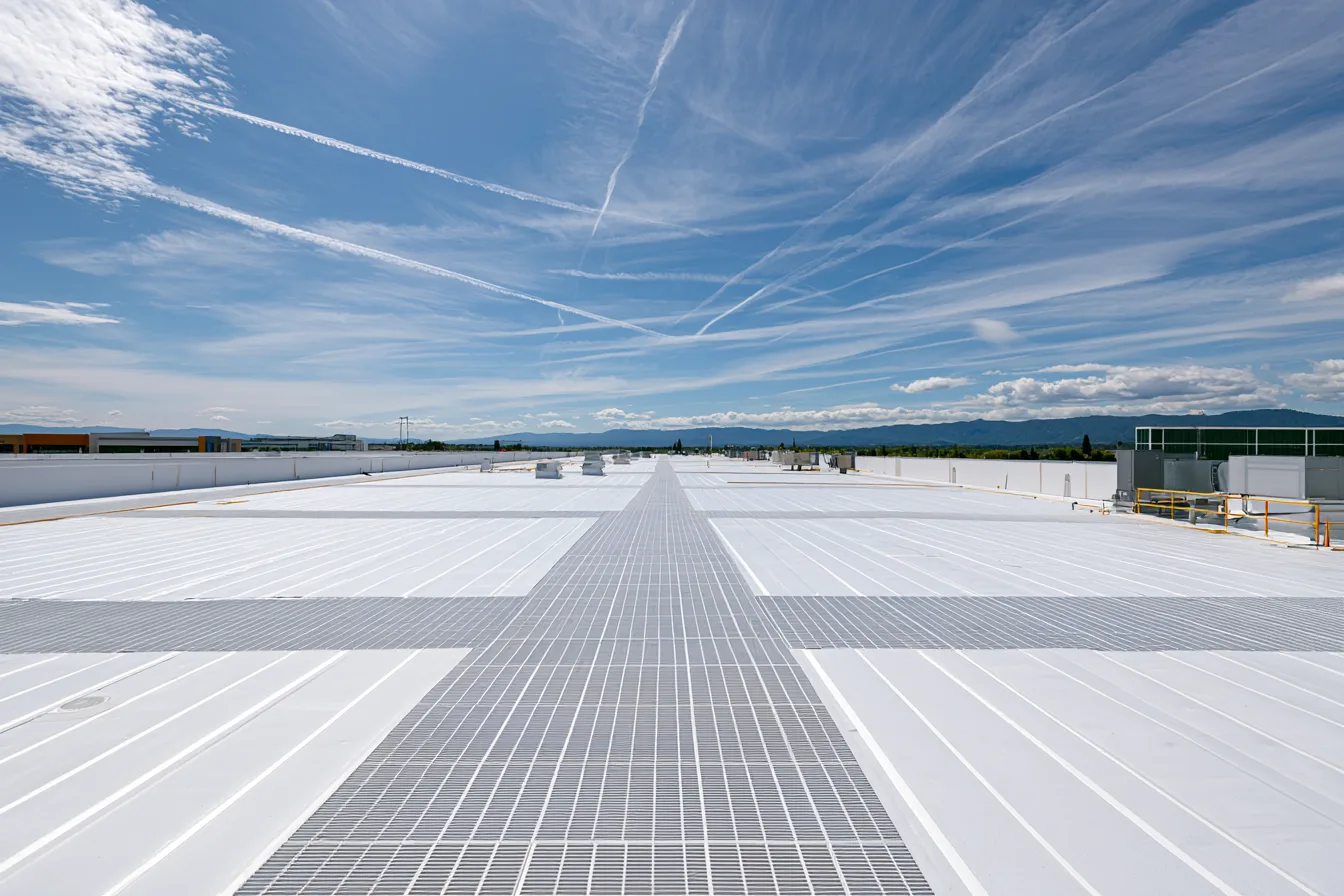
A roof can stay out of sight while the activity on it changes. Equipment gets serviced, debris gathers near an outlet, or a new penetration is added. Those changes deserve a place in the roof conversation before the next leak becomes the only reason to look.
Maintenance starts with the roof system and what is observable: the condition of exposed surfaces and flashings, drainage paths, service access and earlier repairs. That closer look helps distinguish a detail needing attention now from deterioration that calls for a larger project.
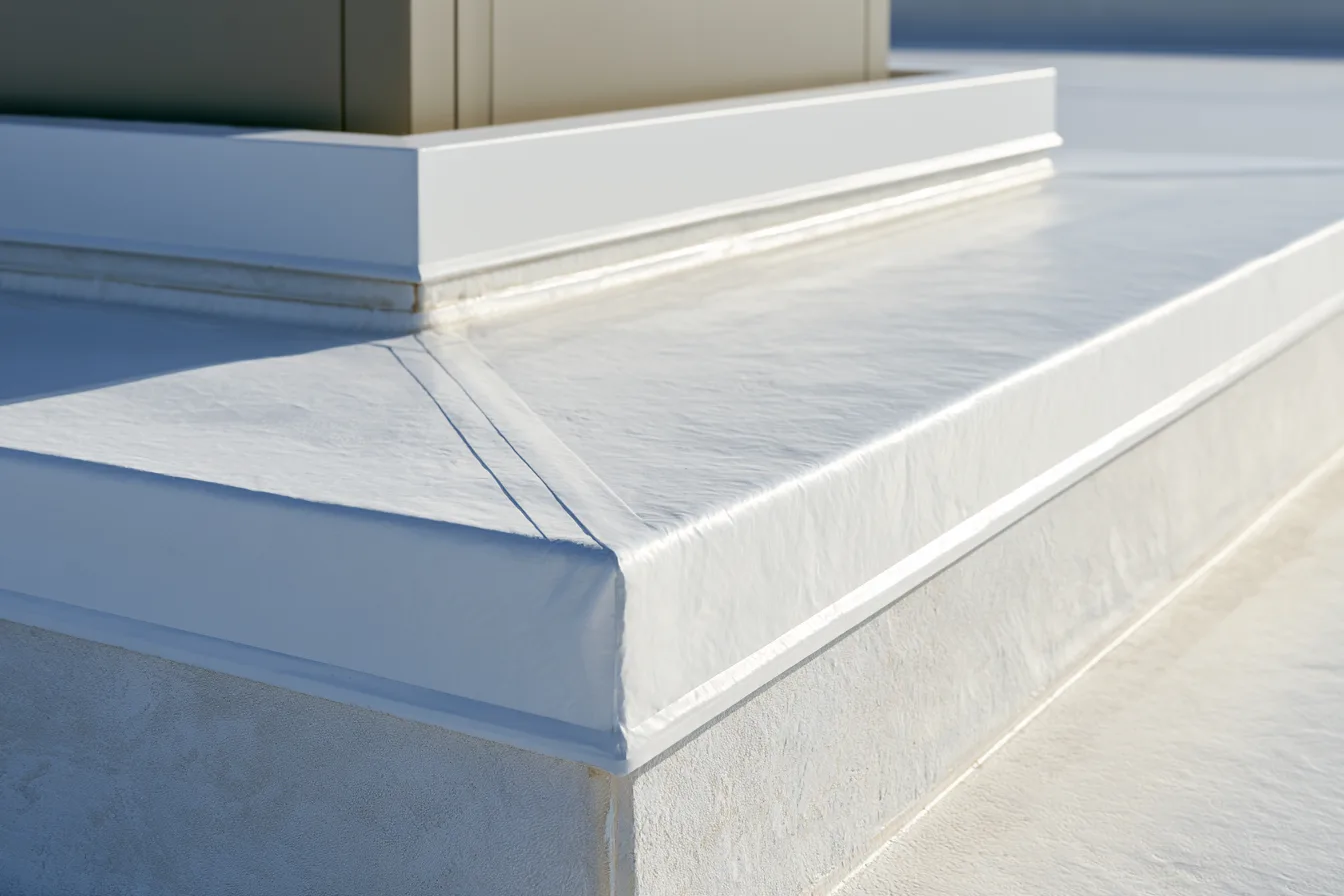
People servicing a rooftop unit cross the weather surface and work beside its flashings. Walkway protection and a sensible access route help keep that activity organized, but the actual pads and details must suit the installed roof system.
New equipment or cabling can introduce a penetration or change a curb detail. The roof connection needs to be included in that work. A service visit ending does not establish that the weather detail was restored correctly.
If a leak appears after rooftop work, share that timing with the roofer. It is a useful lead for the assessment, not proof that the person who visited caused the leak.
A maintenance visit is part inspection and part housekeeping. Most of what it catches is small and dull, and that is the point.
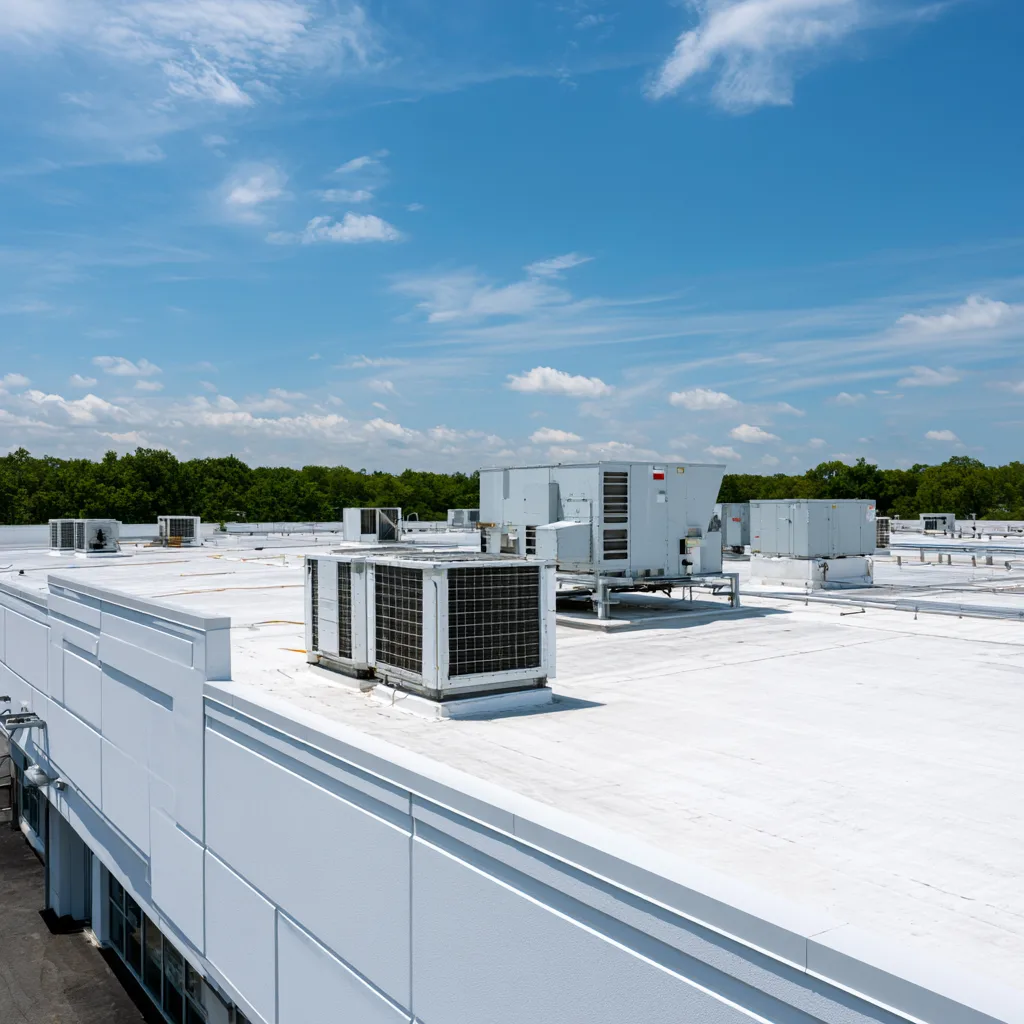
Leaves, gravel, bottles and roofing debris are cleared so water can leave the roof. A blocked drain turns a rainstorm into standing water, and standing water finds every weak seam.
Laps are probed, and flashings at walls, curbs and pipes are checked for splits, pulled corners and failed sealant. Small openings are resealed or patched on the spot when that is part of the agreement.
Pitch pans are topped up, termination bars and counter-flashing are re-caulked where the sealant has dried out, and loose edge metal or backed-out fasteners are secured.
Dropped panels, dragged tools and loose screws around serviced units leave punctures. The area around every unit and along the path from the hatch or ladder gets a close look.
Spring and fall visits bracket the storm season and the leaf drop. An extra walk after hail or a major wind event, or after a contractor has been working on the roof, catches damage before the next rain does.
The record should help the next roofing decision. Useful information stays tied to the actual building and roof area.
The covering, assembly details and any known installation or alteration dates help identify compatible work. An unknown original date should remain unknown rather than become an estimated roof age.
A description of the detail, location and observed condition helps distinguish a new concern from the same recurring problem. Photos can support that record when available. Agree how findings will be recorded and shared as part of the visit.
Repair history and equipment changes help explain what material has been added and which details were disturbed. The record should distinguish temporary measures from completed permanent work.
An applicable warranty may specify inspection, maintenance or notification obligations. Those terms are specific to the coverage document and should remain with the roof information rather than being assumed from a product name.
A limited opening, drain-area defect or localized flashing problem can lead to flat roof repair. The repair should still establish the condition around and below that area.
Recurring leakage across different areas, widespread deterioration or affected underlying layers calls for a broader assessment. Restoration suitability and replacement are different questions; maintenance cannot make an unsuitable assembly sound.
The roof system, condition, exposure, recent events and any applicable coverage requirements determine an appropriate schedule. Review is also useful after material changes to rooftop equipment or after a new concern appears. Use those conditions to agree on a schedule for the building.
Roof access, fall hazards and the installed system require appropriate training and arrangements. Staff can share indoor leaks and observations made from safe locations without going onto the roof. Roof-level work belongs with people equipped for it.
No. It can identify observable problems and support planned work, but it is not a guarantee against hidden conditions or future damage. The value is in recognizing and addressing specific concerns rather than promising a leak-free term.
Yes. Start with the concern or the condition question and request a free inspection. You can discuss any ongoing care after the roof condition is understood.
Tell us about the building, a recurring issue or the roof-care question you need to settle. Start with a free inspection in Balch Springs.
(469) 489-5594Start with a free roof inspection.